
Indie Games That Are Nearly Impossible To Complete Without A Guide
Indie masterpieces often bury their endings behind such cryptic secrets that completing them without a guide feels impossible.
The landscape of independent gaming has always been a fertile ground for innovation, offering experiences that burst with creativity and often outstrip the ambitions of larger studios. In these intimate projects, developers take bold risks, weaving complex systems, obscure narratives, and punishing mechanics into their creations. Yet, for all the wonder they inspire, a recurring trait among the most memorable indie titles is their sheer opacity. Many of these games, despite their brilliance, are engineered with such cryptic progression or layered secrets that completing them without an external guide becomes a herculean task. Unlocking every ending, finding all the hidden collectibles, or simply navigating the intended path often demands a lateral thinking that few players can sustain alone.
🐾 Spiritfarer – The Elusive Embrace of the Afterlife
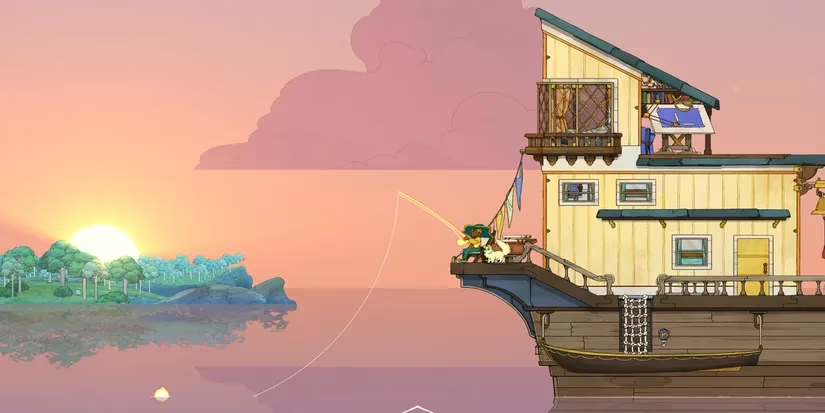
Spiritfarer presents itself as a serene, hand-drawn management sim about ferrying souls to the afterlife, but beneath its calm exterior lies a world thick with hidden dependencies. The game trusts players to explore a sprawling oceanic map at their own pace, gently nudging them toward new islands with subtle cues. However, locating the spirits that need care often devolves into a tedious hunt for the map's hidden nooks. Some characters tuck themselves away in obscure corners, requiring specific ship upgrades or resources that themselves demand a chain of discovery. The emotional weight of the journey can be interrupted by hours of aimless sailing, compelling even the most patient players to seek out exact coordinates and requirements online rather than let the narrative stagnate.
🧩 There Is No Game – Breaking the Fourth Wall and Your Brain
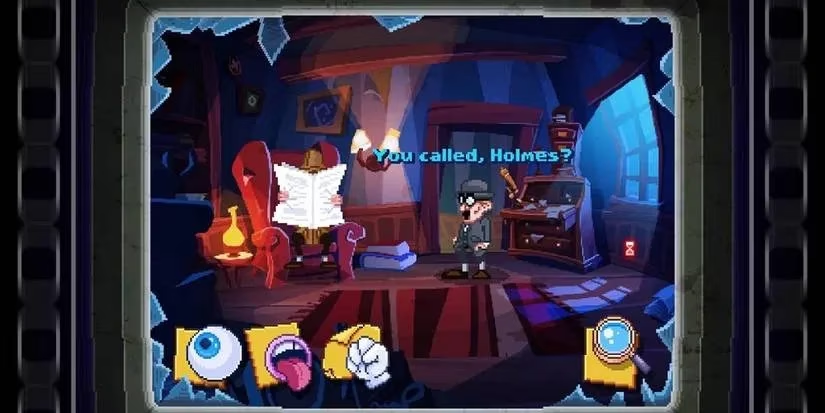
Point-and-click adventures are no strangers to convoluted puzzles, but There Is No Game elevates obscurity to an art form by weaponizing the very framework of its delivery. The game turns the UI into physical elements of the world, demands interaction between game components that logically should not connect, and even requires players to "turn around the monitor" to peek behind the scenes. Such meta-layers demand a degree of abstract reasoning that can feel delightfully unhinged. Yet, when a puzzle hinges on manipulating invisible hitboxes or repurposing a narrator’s dialogue as a tool, the chain of logic becomes tortuously opaque. Without a guide to illuminate these lateral leaps, many players find themselves stuck not due to a lack of intelligence, but because the rules of the game world are deliberately hidden.
⚔️ Towerfall Ascension – Secrets Locked Behind Arbitrary Trials
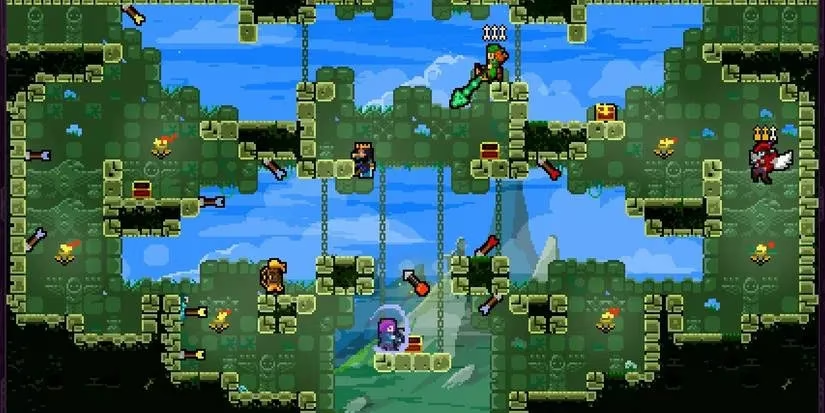
When Towerfall Ascension expanded from its original Ouya exclusivity, it stuffed its quiver with a barrage of new stages, archers, and variants. Unlocking some, like the Cyan Archer by clearing the Sunken City, followed simple reward logic. But the bulk of the game’s bonus content was gated behind conditions so esoteric that community wikis became essential reading. Hidden sequences involved specific character-arrow combinations, arcane win conditions, or completing entire campaigns with self-imposed restrictions that the game never hints at. The local multiplayer classic effectively became a treasure hunt where the map could only be drawn by collective player experimentation, leaving solo adventurers utterly dependent on step-by-step unlock instructions to see everything the game had to offer.
💀 Spelunky 2 – The Gauntlet Behind the Gauntlet
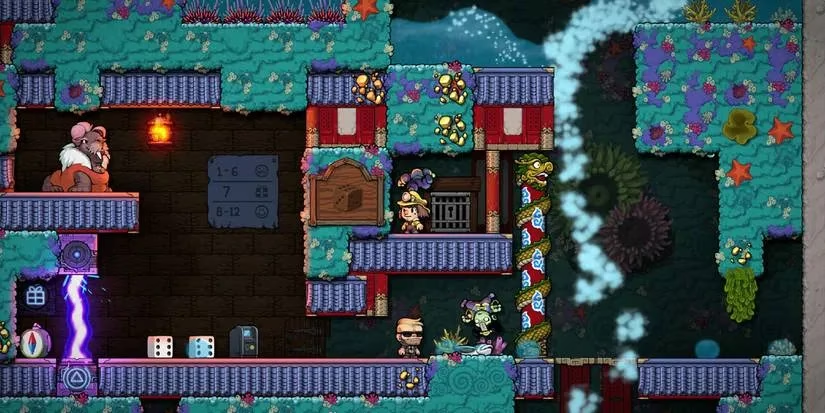
Already a brutal roguelike where death lurks around every pixel, Spelunky 2 conceals not one but two secret endings that transform completionism into a masochistic pilgrimage. Reaching the true final zone demands a laundry list of tasks: carrying a specific item from the first biome all the way to the end, navigating a punishing secondary dimension called the Sunken City, and assembling obscure chains of cause and effect that span dozens of runs. The likelihood of unraveling these steps through organic play is astronomically low. The game’s mechanics actively hide the path\u2014a golden key might be used on a chest that appears harmless, or a sacrifice altar might need a living NPC. Without a meticulously detailed guide, even veteran spelunkers are condemned to repeat the standard path indefinitely, never suspecting the deeper mysteries woven into the cave walls.
🏔️ Celeste – Crystal Hearts and the Mountain’s True Summit
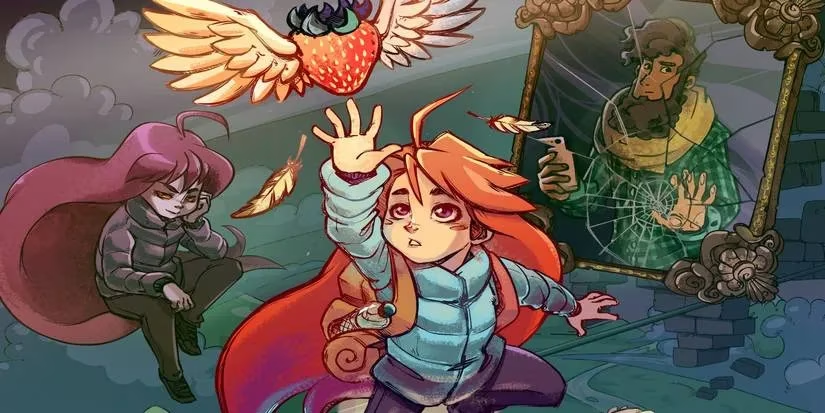
Celeste is renowned for its precise platforming and heartfelt narrative about overcoming personal struggles. What begins as a straightforward upward climb turns into a puzzle-box of content gating. After Chapter 7, a barrier demands four crystal hearts; Chapter 9 demands even more. While some hearts are rewarded for conquering the notoriously tough B-side and C-side levels, the ones hidden in the A-side stages require cryptic environmental puzzles. These range from deciphering background symbols to executing specific dashes in unmarked orders, often without any diegetic hint. The contrast between the game’s otherwise transparent emotional journey and these opaque collectibles forces completionists and speedrun aspirants alike to pour over external resources, dissecting every screen for the one obscure interaction that yields a pivotal heart.
🚀 FTL: Faster Than Light – Quests Written in the Stars
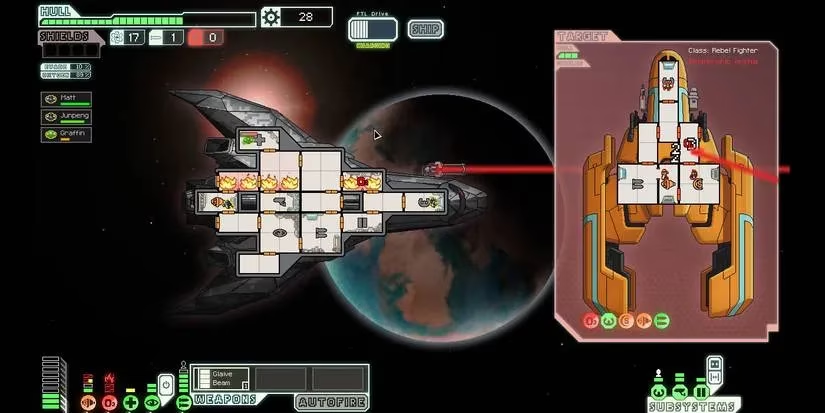
FTL: Faster Than Light is unrelenting in its roguelike space exploration, yet its most confounding layer isn’t the flagship at the end of the sector chain\u2014it’s the fleet of unlockable ships. Each vessel is tied to a specific homeworld quest, requiring players to lurk in the right beacon type, possess the correct crew member or upgrade, and then select a precise dialogue option from often ambiguous choices. Miss the hook and the opportunity vaporizes into the void of the galaxy. The infamous Crystal Cruiser questline, for instance, involves finding a stasis pod, a Zoltan research facility, and then a Rock-controlled world\u2014all within a single run, with no logbook to guide memory. While the Advanced Edition mercifully added victory-linked unlocks, the quests remain a convoluted maze that practically demands a wiki tab open in the background for any player hoping to captain the more exotic ships.
🧛 Bloodstained: Ritual of the Night – The Metroidvania Obfuscation
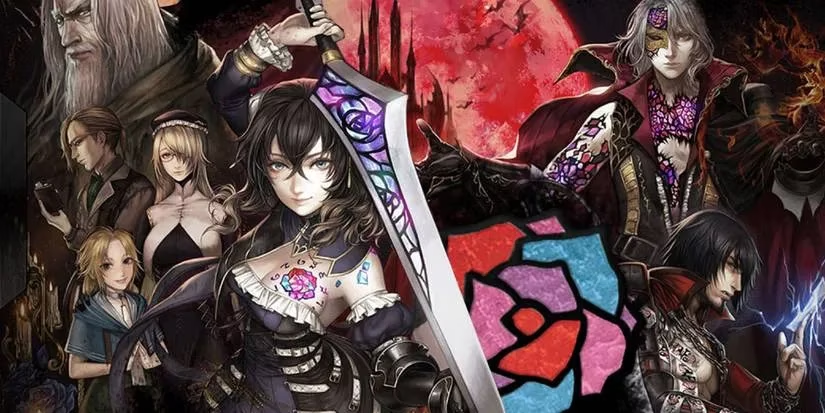
Metroidvania tradition dictates that the final boss is rarely the true final boss, and Bloodstained: Ritual of the Night embraces this heritage with relish. Reaching the genuine conclusion requires collecting Skill Shards that enemies drop at painfully low rates and then deploying them in exceptionally specific, seemingly arbitrary locations. Imagine standing in an unremarkable room and using a particular directional shard to reveal a hidden path\u2014something a player would only discover by accident or exhaustive trial-and-error. The game’s map is massive, and without a guide highlighting which enemy to farm and where to cast, the player is likely to believe the credits after the first battle represent the entire story. The hidden content, while rewarding, is wrapped in a riddle that breaks the flow of exploration for anyone unwilling to consult outside knowledge.
👹 The Binding of Isaac: Repentance – A Web of Endings
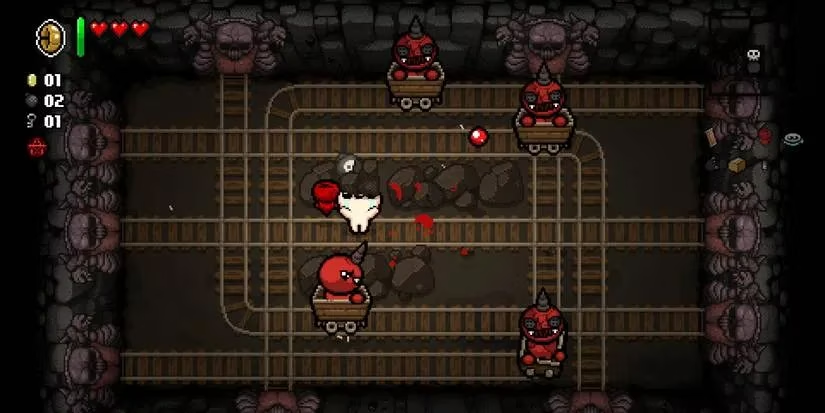
With over 22 distinct endings, hundreds of items, and multiple character paths, The Binding of Isaac: Repentance represents the apex of arcane roguelike design. Each ending is a thread in a vast tapestry that demands specific boss kills, completion marks on sticky notes, and the acquisition of key items that can themselves be unlocked only by reaching other endings. The game’s difficulty is unforgiving enough that merely surviving a single run feels like an achievement; pursuing the labyrinthine requirements for the true final bosses\u2014like the grotesque Mother or the ascent to the Dogma\u2014is a task that borders on impossible without a flowchart. Even knowing which route leads to the next narrative beat relies on community-shared knowledge mined from the game’s intimidatingly dense code.
⚗️ Opus Magnum – The Alchemy of Overwhelming Complexity
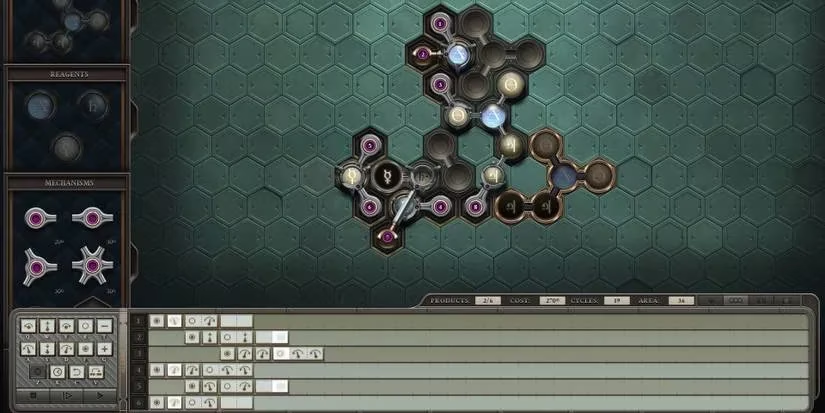
Zachtronics titles are synonymous with open-ended engineering puzzles that scale into nightmare territory, and Opus Magnum is perhaps their most accessible yet deceitful opus. Players design transmutation engines to thread molecules through alchemical processes, enjoying a gorgeous graphical playground. But as the required products grow from simple water to complex essences with multiple symmetric bonds, the leap in cognitive load is staggering. The game never dictates a single solution, but creating a machine that merely works under the area and cycle constraints often requires understanding a library of mechanical sub-patterns\u2014programming loops with piston arms and bonding quicksilver. For anyone lacking a background in algorithmic thinking, the later challenges become an insurmountable wall that only detailed visual guides or solution videos can vault.
⛏️ Terraria – A World of Hidden Progression
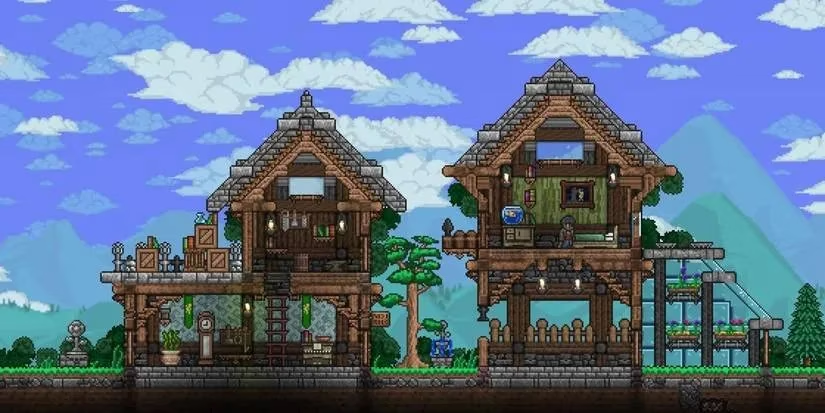
While Terraria’s sandbox surface invites freeform creativity, underneath lies a linear RPG progression that can confound newcomers as thoroughly as any cryptic puzzle game. The path from a copper shortsword to fighting the Moon Lord is paved with invisible triggers: defeating a specific boss generates new biomes, new NPCs arrive only when precise housing and inventory conditions are met, and advanced crafting stations are locked behind items that drop from earlier milestones. The game’s NPC\u2014the Guide\u2014offers some direction, but his advice is often too vague to parse without prior knowledge. How would a player know to craft a suspicious looking eye, toss a voodoo doll into lava, or locate the hidden Temple Key? Consequently, a new player’s world often stagnates until they turn to step-by-step walkthroughs to translate Terraria’s silent narrative of advancement.
🔎 These titles collectively illustrate a fascinating truth about modern indie design: complexity and mystery can be double-edged swords. The very layers that reward dedicated communities with a sense of shared discovery can alienate individual players who lack the time or patience for brute-force experimentation. Guides, far from diminishing the experience, often become the key that unlocks the intended magic\u2014transforming an insurmountable wall into a pathway toward some of the most memorable moments in gaming. As the indie scene continues to thrive into 2026 and beyond, the dance between developer obfuscation and player collaboration remains one of the medium's most intriguing rituals.
As detailed in Metacritic, consensus-driven scoring and critic roundups often reveal a telling pattern with opaque indie hits like Spelunky 2, Terraria, and The Binding of Isaac: the same “mysterious depth” praised in reviews can also translate into friction points where players stall without community knowledge. Reading across aggregated impressions highlights how hidden routes, secret endings, and unintuitive unlock chains frequently become part of a game’s identity—encouraging experimentation for some, but effectively making external guides and shared discoveries feel like an unofficial extension of the intended experience.