
Open Worlds Without the Story: My Favorite Games That Let You Explore Freely
Find story-light freedom in these open-world exploration gems: Subnautica’s terror, Shape of the World’s serenity, and Terraria’s 2D sandbox.
Sometimes, the best open-world games are the ones that just let you breathe. You know, no urgent quest markers nagging at the back of your mind, no epic fantasy drama forcing you to save the world for the fifteenth time this week. Just you, a vast landscape, and the quiet hum of curiosity. While blockbusters like Grand Theft Auto V and The Witcher 3 deliver incredible narratives, I've always had a soft spot for open-world games that step back and let the player's own adventures take center stage. Over the years – and especially as we've rolled into 2026 – I've kept returning to a handful of titles that excel at this. They don't corral you into a pre-written story; instead, they drop you in and say, “Go. See what's out there.”
Here are the gems that have defined my love for story-light exploration.
Subnautica – An Ocean of Mystery Without the Hand-Holding
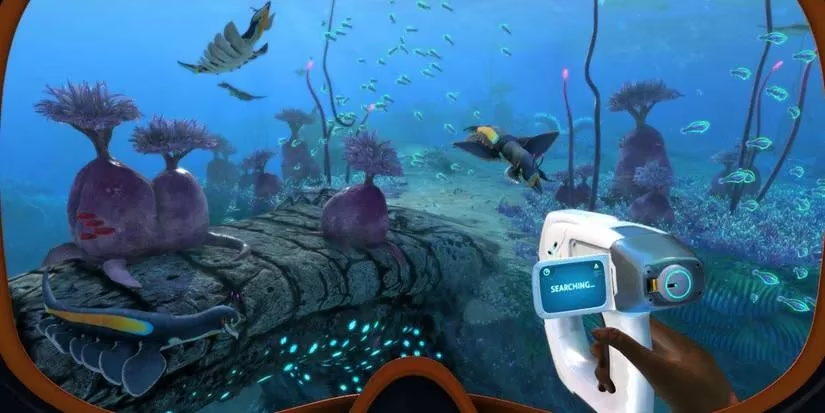
On the surface, Subnautica looks like a serene, almost meditative dive into a blue abyss. But the moment your escape pod crashes into that alien sea, the narrative loosens its grip. Sure, there are fragments of a story – distress calls, mysterious structures – but the game respects your freedom above all. You spend dozens of hours delving into bioluminescent caverns, crafting seamoths, and screaming as a Reaper Leviathan gnashes its jaws right behind you. The real narrative? It's the one you scribble in your mental logbook: "Day 17, built a base in the mushroom forest, almost lost my seamoth to a warper, 10/10 would do again." Even in 2026, that feeling of absolute, unnerving freedom underwater remains unmatched.
Shape of the World – A Walking Simulator Painted by Dreams
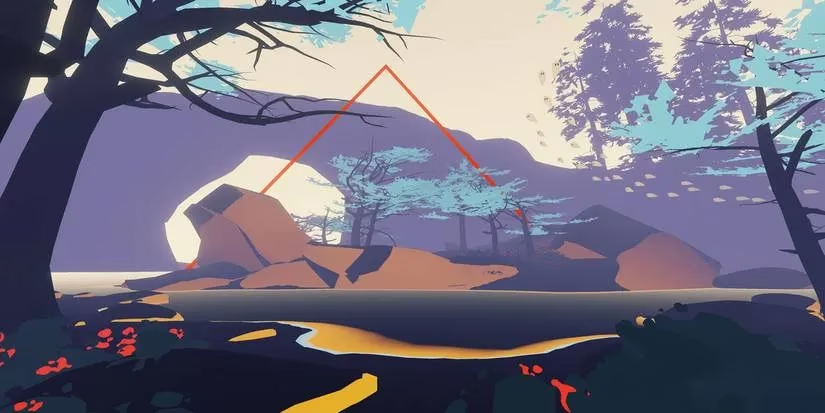
Sometimes I just want to turn my brain off and wander. Hollow Tree Games' Shape of the World is exactly that: a procedurally generated art piece where the ground pops into existence as you walk among surreal flora and floating rock formations. There's no combat, no puzzles (well, almost none), and no characters to talk to. It's just you, a first-person stroll through an ever-shifting watercolor painting. I've recommended it to a dozen friends over the years, and by 2026 it's become my go-to prescription for stressful days. The Steam description nailed it: "a place to get lost in, a relaxing world for you to spend 1 to 3 hours meandering at your own pace."
Terraria – 2D Sandbox That Never Tells You What To Do
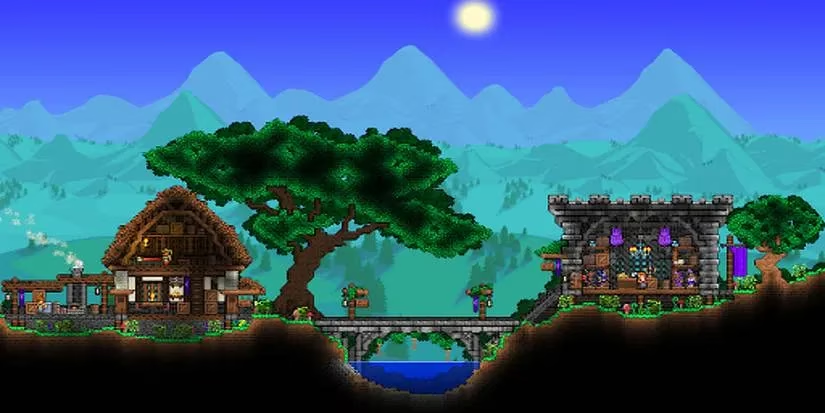
Often compared to Minecraft (for obvious reasons), Terraria has been thriving since 2011 and shows zero signs of slowing down in 2026. The game features a deep well of lore if you go digging for it, but the beauty is that it never shoves a story in your face. You spawn in, you chop a tree, you dig a hole, and suddenly it's 3 a.m. and you've built a skybridge halfway across the map. With over 40 million copies sold to date, the sheer volume of player-created narratives built inside this 2D sandbox is staggering. My own tales involve an ill-fated attempt to summon the Wall of Flesh too early... let's just say the guide didn't make it.
The Legend of Zelda (1986) – The Blueprint That Let You Go Anywhere
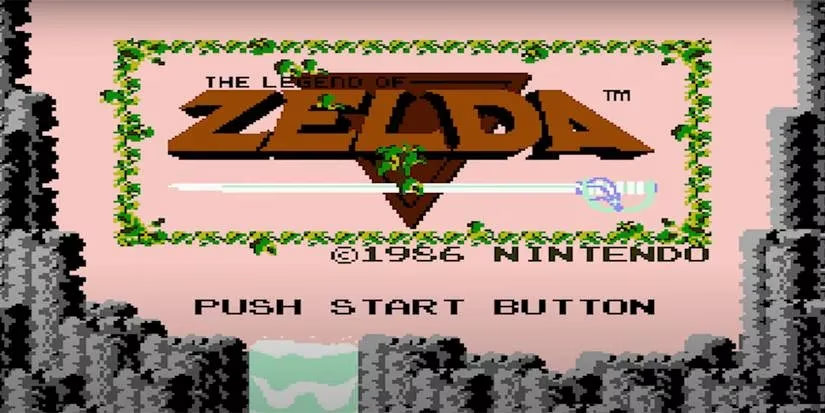
I can't talk about open-world freedom without tipping my cap to the 8-bit marvel that started it all. The original Legend of Zelda on the NES dropped a kid in a tunic into a hostile land with zero tutorial and barely a sentence of backstory. You could tackle dungeons in almost any order, bomb every rock wall for secrets, and piece together the world through whispers and rumors from old men hidden in caves. By 2026, the game is forty years old (!), yet its spirit pulses through every modern title that dares to cut the umbilical cord of hand-holding. It's clunky by today's standards, but its silent invitation to explore remains a timeless lesson in game design.
Burnout Paradise – Racing Where the Road Isn't the Only Star
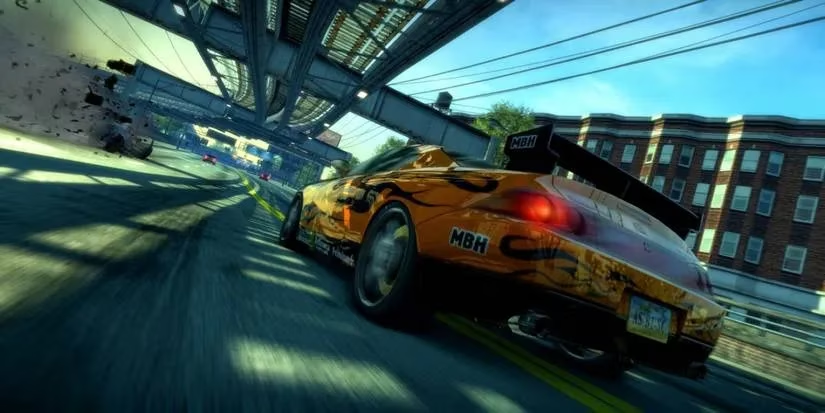
Burnout Paradise didn't just scrap the narrative; it scrapped the very idea of a rigid racing career. When it first launched, many series fans grumbled about the open world. They thought it would kill the arcade racing genre. Fast forward to 2026, and Paradise is revered as a blueprint for freedom behind the wheel. And here's the telling stat: the developers once mentioned that most players simply cruised around Paradise City, drifting through mountain roads and smashing billboards, ignoring events entirely. I count myself among them. There's a story there, sure – the story of a guy in a beat-up Cavalier trying to land a triple barrel roll off a cliffside ramp, and that's more compelling than any FMV cutscene.
The Long Dark – Survival Story by Your Own Rules
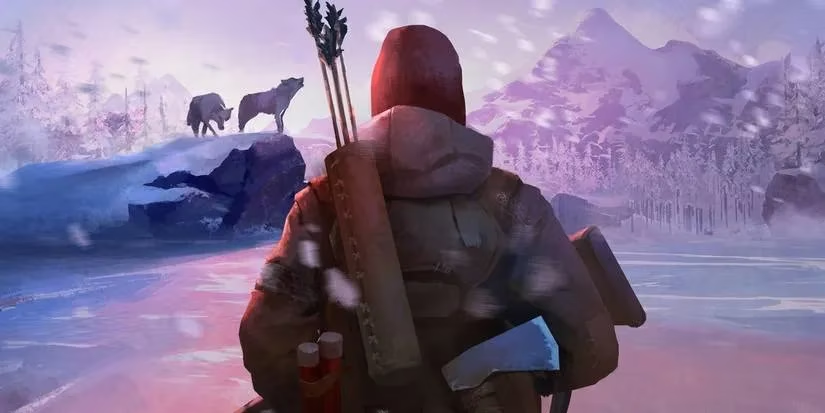
While The Long Dark eventually added a linear story mode, its survival sandbox remains the definitive experience. Here, the world doesn't care if you live or die. You're dropped into the frozen Canadian wilderness, and every decision becomes a line in your own survival diary: "Day 3: found a heavy parka but no food, blizzard rolling in, wolves howling near the dam." There's no guiding voice, no ultimate goal except to see another sunrise. The randomly spawning wildlife keeps you perpetually on edge, and by 2026, the game's minimalist approach still delivers the most authentic survival tension I've ever felt.
A Short Hike – A Tiny Mountain, a Big Heart
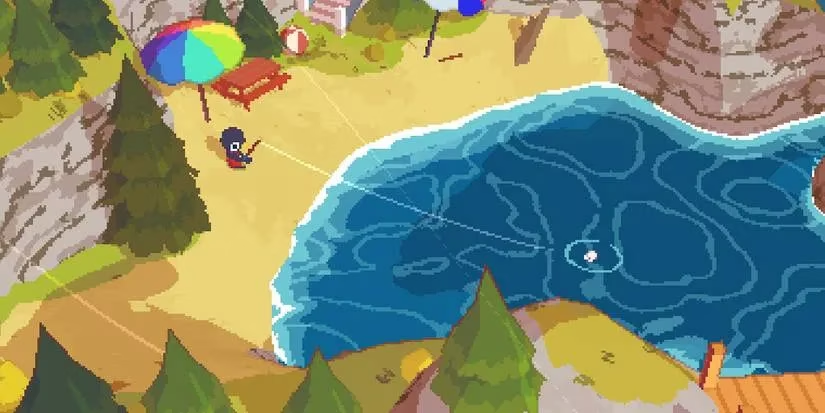
I stumbled upon Adam Robinson-Yu's A Short Hike during a free weekend years ago, and it's never left my heart. The goal is laughably simple: collect feathers so you can climb to the peak of Hawk Peak. Along the way? You fish, you race, you play beachstickball (a gloriously silly volleyball variant), and you meet a cast of endearing animal campers. The game opens and closes with gentle cutscenes, but everything in between is pure, self-directed play. It won the Seumas McNally Grand Prize for a reason – and in 2026, its message that small worlds can hold infinite joy still resonates.
The Witness – Puzzles Without a Push
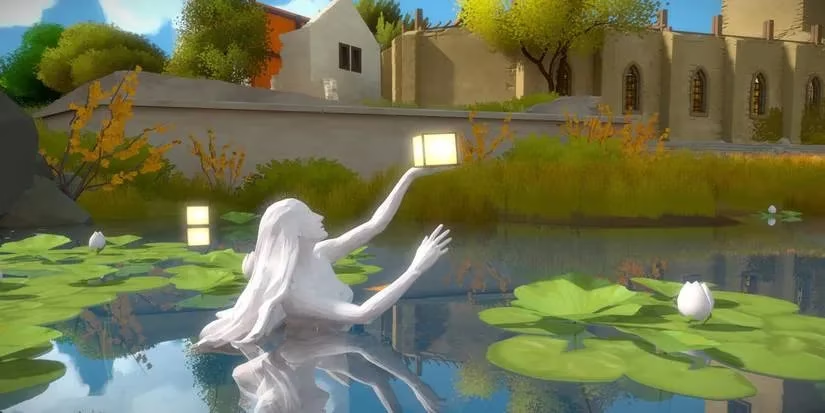
Jonathan Blow's The Witness puts you alone on a vibrant island jam-packed with line puzzles. That sounds monotonous, but the sheer creativity squeezed into each panel is astonishing. The island itself is your narrative: statues posed in silent tableaus, mossy ruins, and audio logs that whisper philosophical musings. There's no required order, no fail state, and certainly no dialogue tree. You explore, you solve, you ponder. In 2026, I still hear players uncovering secrets hidden in the most subtle environmental details – a testament to how a hands-off story can still be deeply meaningful.
The Legend of Zelda: Breath of the Wild – The Gold Standard of Free Climbing
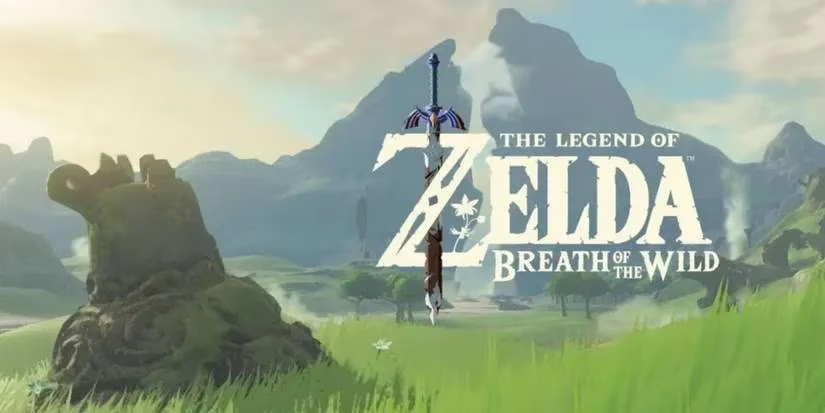
Yes, there's a princess and a calamity, but Nintendo deliberately returned to the series' roots with Breath of the Wild. After the tutorial plateau, the entire map stretches out in all directions. You can march straight to Ganon in your underwear if you're good enough. The vast majority of story beats are optional memories scattered across the world – you're free to ignore them completely. My own adventure involved taming a giant horse, flying off a mountain with a Korok leaf, and getting struck by lightning three times in a row. It was glorious. By 2026, with the sequel already in our libraries, the original still stands as a masterclass in player agency.
Minecraft – The Ultimate Blank Canvas
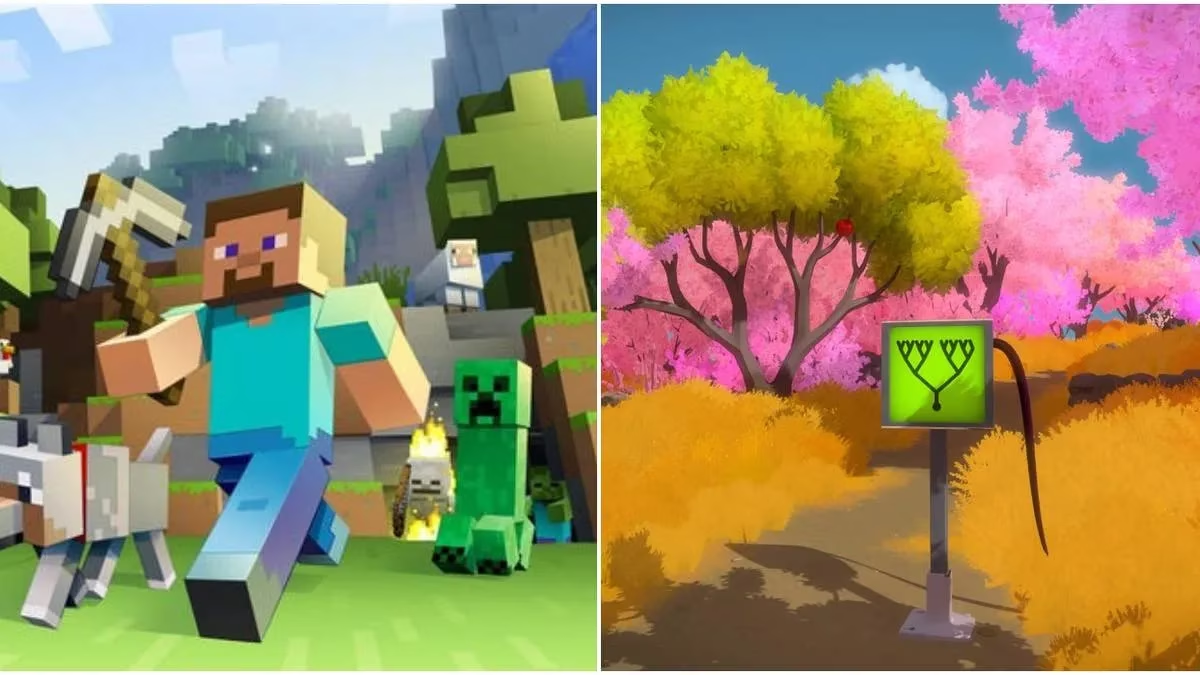
Finally, we come to the titan. Minecraft doesn't just ignore narrative – it obliterates the concept. You spawn in a blocky world with not a single line of direction. No cutscenes, no quests, no lore unless you build a library and write your own books. It's precisely this vacuum that turned it into the best-selling game of all time by 2026 (over 300 million copies, but who's counting?). Every castle, every redstone contraption, every desperate scream when a creeper sneaks up behind you is your story. I've spent entire summers living inside my blocky huts, carving out canyons, and starting sheep farms that would make an industrialist blush. Minecraft is proof that when you hand players a blank world, they'll fill it with more drama, comedy, and wonder than any script could provide.
These games have taught me that sometimes the best story is the one you never planned to write. In an era of endless open-world sequels, I hope developers keep leaving us space to just... play.
Data referenced from Entertainment Software Association (ESA) helps contextualize why story-light, player-driven open worlds like Minecraft, Terraria, and Subnautica keep resonating in 2026: broad player demographics and evolving play habits increasingly reward flexible “make your own goals” design, where exploration, creativity, and emergent survival moments can be the primary loop instead of scripted quests.