
Terraria's Universal Player Rituals: From Box Houses to Hellbridges
Discover the universal Terraria rituals and shared player experiences that define this sandbox adventure. From humble square starter homes to chaotic mismatched furniture, these iconic moments connect every survivor's journey, creating a uniquely personal yet communal gameplay tapestry.
As a sandbox game, Terraria offers players a vast canvas of possibilities, yet within this boundless freedom, certain shared experiences emerge as universal rites of passage. Whether you're a newcomer in 2026 or a seasoned veteran who has witnessed the game's evolution over the years, there are specific, almost instinctual behaviors that transcend individual playstyles. These rituals, born from the game's mechanics and the collective wisdom of its community, form a common thread connecting players across different worlds and skill levels. From the initial scramble for survival to the ambitious engineering projects in the deepest biomes, these shared moments define the Terraria journey, creating a tapestry of relatable gameplay that feels both personal and communal.
Building A Square Starter Home: The Humble Beginnings
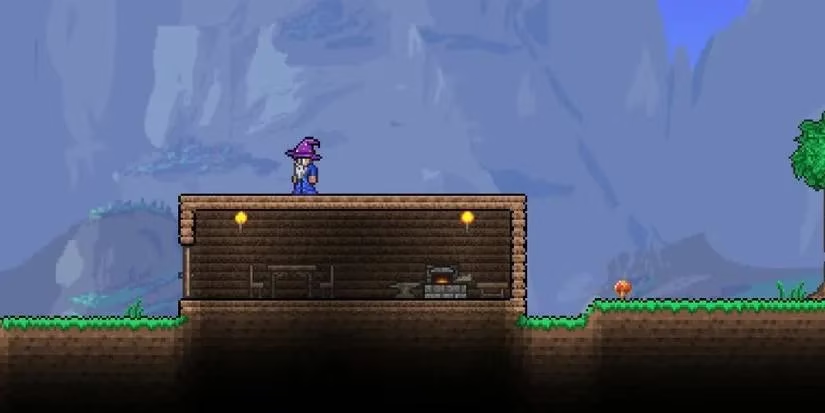
The first night in Terraria is a baptism by fire—or more accurately, by zombies and demon eyes. Overwhelmed by choices and pressed for time, most players resort to constructing what can only be described as an architectural masterpiece of practicality: the square box house. Like a fledgling bird building its first nest with whatever twigs are nearby, the Terraria beginner grabs dirt or wood—whichever is most abundant—and erects four walls and a flat roof, often forgetting the back wall entirely in their haste. This structure, which resembles a child's drawing of a house come to life, serves as a fortress against the nocturnal horrors. Even as players graduate to building Gothic castles or floating islands, that initial box remains an iconic symbol of survival, a nostalgic reminder of simpler times when safety mattered more than aesthetics.
Wooden Everything: The Monochromatic Phase
Before discovering the rainbow of blocks available, wood dominates the early-game landscape. The starter area becomes a veritable lumberyard, with wooden walls, wooden floors, wooden ceilings, and wooden furniture creating a monochromatic base that looks like it was designed by a particularly enthusiastic beaver. This phase is akin to a painter using only one color on their palette—functional but lacking variety. As exploration begins, new wood types enter the inventory: rich mahogany from the jungle, shimmering boreal wood from the ice biome, or the vibrant palm wood from ocean shores. The temptation to simply add mismatched wooden extensions creates structures that look like architectural Frankenstein monsters, patched together from different forests. Eventually, stone, brick, and other materials will replace wood as the primary building block, but that initial wooden fortress remains a universal stepping stone.
Mismatched Furniture: Chaotic Interior Design
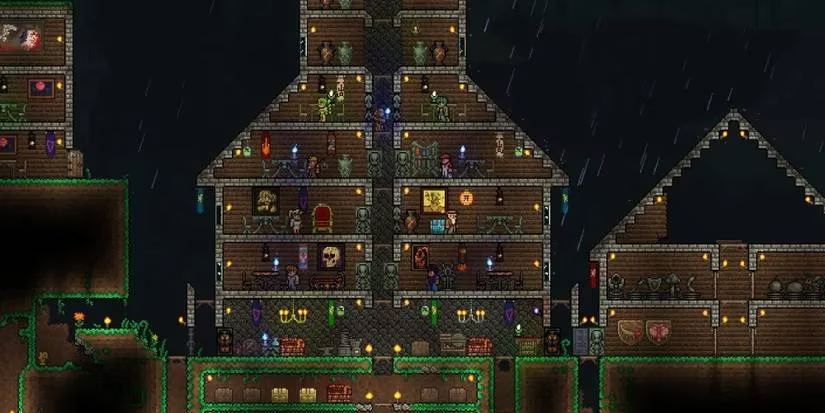
Terraria's furniture collection is a treasure hunter's dream and an interior designer's nightmare. Underground cabins yield Victorian sofas, dungeon expeditions produce bone chandeliers, while crafting stations allow creation of everything from honey-themed bookcases to obsidian bathtubs. The result? Homes that look like thrift stores after an earthquake. Players display their hard-won loot with pride, creating spaces where a gothic grandfather clock might stand beside a palm wood bed, which sits across from a steampunk boiler. This eclectic approach to decor is less about cohesive design and more about showcasing adventures—each piece a trophy from a different biome or boss fight. Like a museum curator with no thematic constraints, the Terraria player creates living spaces that are chaotic, personal, and strangely charming in their absurdity.
Running Scared Through The Crimson/Corruption
The Crimson and Corruption biomes serve as Terraria's haunted houses—places where the atmosphere alone can raise goosebumps. First-time visitors often find themselves sprinting through these twisted landscapes like someone being chased through a nightmare funhouse. The biome's denizens—Flying Hungries with their disturbing pincers, or Eaters of Souls that seem to materialize from shadows—pursue players with relentless determination. Thorns snag at your heels, chasms threaten to swallow you whole, and the eerie background music completes the horror-movie ambiance. Whether you're a novice fleeing for your life or a veteran speedrunning to collect vital resources, the urge to move quickly through these evil biomes is nearly universal. The experience transforms from terrifying to routine, but that initial heart-pounding sprint remains a shared memory.
Panicking When Fighting A Boss For The First Time
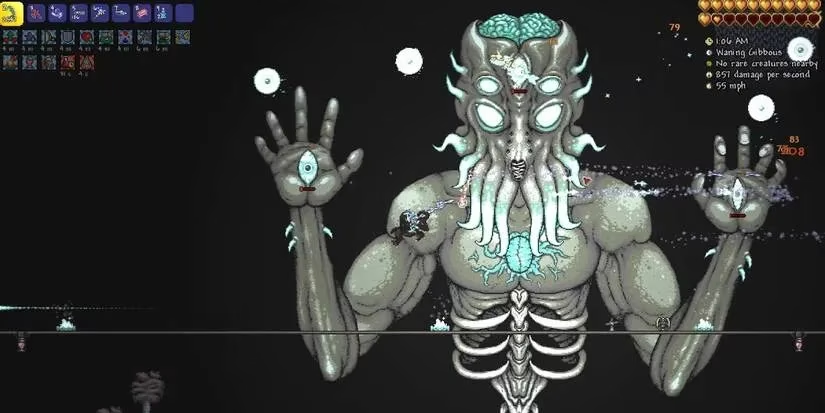
Boss encounters in Terraria are less like structured battles and more like being thrown into a blender with the lid off. The first confrontation with any major boss—be it the wall of flesh that seems to fill the screen or the Moon Lord with his constellation of deadly projectiles—typically devolves into pure, unadulterated panic. Players circle their arenas like startled mice, healing frantically, firing weapons in random directions, and generally forgetting every strategy they planned. This initial chaotic dance is as predictable as sunrise; even the most prepared player finds their cool evaporating when that health bar appears at the bottom of the screen. Like a novice tightrope walker suddenly realizing they're a hundred feet in the air, the Terraria boss fighter experiences a moment of sheer terror before (hopefully) settling into a rhythm. Subsequent battles become progressively more controlled until what once seemed impossible becomes routine—a transformation that mirrors the player's own growth.
Building A Hellevator: The Vertical Highway to Hell
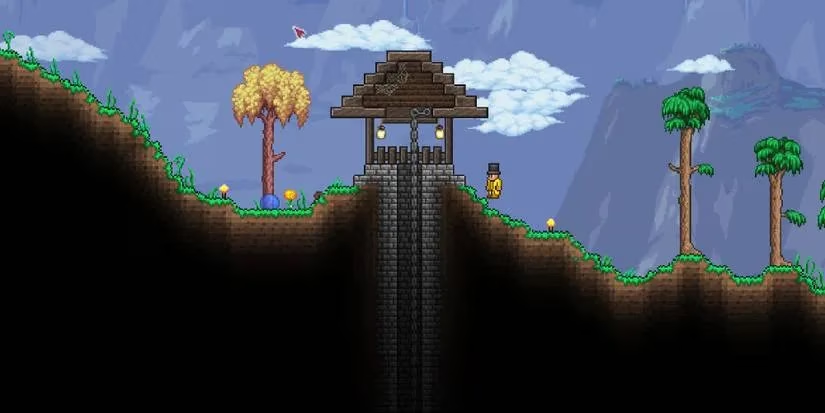
The Hellevator represents Terraria players' eternal conflict between practicality and self-preservation. This vertical shaft, stretching from the surface to the underworld's molten depths, is the equivalent of digging a well straight through the Earth's crust—something everyone advises against but everyone does anyway. Constructing one feels like building your own personal elevator to the afterlife, complete with all the inherent dangers: unexpected caverns that send you plummeting, underground lakes that drown your progress, and of course, the ever-present threat of lava. The Hellevator's construction follows a familiar pattern: initial enthusiasm, followed by near-fatal accidents, implementation of safety measures (ropes, platforms, the occasional torch), and finally, the satisfaction of a direct route to the underworld. It's a project that transforms the player from a surface-dweller to an underworld explorer, creating a physical connection between the safe, familiar overworld and the dangerous, rewarding depths below.
Building A One-Block-Tall Hellbridge: The Underworld's Sidewalk
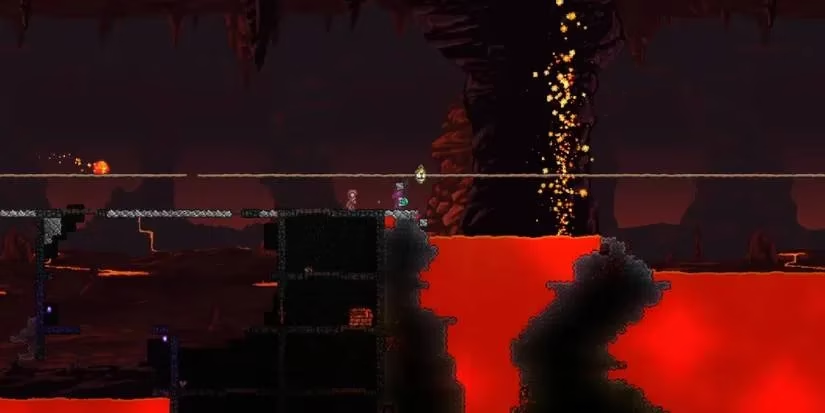
Upon reaching the underworld, players are greeted by a landscape that looks like a toddler's depiction of hell—endless lakes of lava punctuated by precarious islands of ash. Navigation here without movement accessories is like trying to cross a minefield while wearing roller skates. The solution? The one-block-tall Hellbridge, a structure so simple yet so revolutionary it might as well be the underworld's interstate system. Using whatever abundant block is in their inventory (usually dirt or stone saved for this exact purpose), players construct narrow pathways that stretch across the entire map width, creating safe passage over the molten seas below. These bridges are the underworld equivalent of laying down planks over a swamp—functional, inelegant, and utterly necessary. They represent the Terraria player's fundamental desire to tame even the most hostile environments, to impose order on chaos, even if that order is just a single line of blocks stretching toward the horizon.
The Unspoken Rules of Terraria
Beyond these specific rituals, Terraria players share unspoken understandings that govern their worlds:
-
The NPC Hotel Phenomenon: Boxing non-player characters in identical, prison-like rooms for efficiency
-
The Chest Organization Struggle: Attempting to sort items logically before eventually creating a "miscellaneous" chest that contains everything
-
The Pre-Boss Preparation Ritual: Building elaborate arenas with platforms, heart lanterns, and campfires that look more like festival grounds than battlefields
-
The Inventory Management Dance: The constant shuffle between mining gear, building materials, and combat equipment
These shared experiences create what anthropologists might call a "player culture"—a set of behaviors, solutions, and traditions passed between veterans and newcomers. In 2026, as Terraria continues to receive updates and attract new players, these rituals remain surprisingly constant, evolving in details but unchanged in spirit. They serve as a testament to the game's design, which encourages creativity while presenting challenges that elicit similar responses across its player base.
Ultimately, these universal Terraria experiences form a kind of collective memory for the game's community. Whether you built your first box house yesterday or a decade ago, whether you panicked during your first boss fight or methodically farm the Moon Lord for loot, these moments connect players across time and skill levels. They remind us that while Terraria offers infinite possibilities, some paths are so well-trodden they've become traditions—and in a game about exploration and creation, sometimes the most comforting thing is knowing others have been exactly where you are, building the same boxes, running from the same monsters, and digging the same holes straight down to hell.